
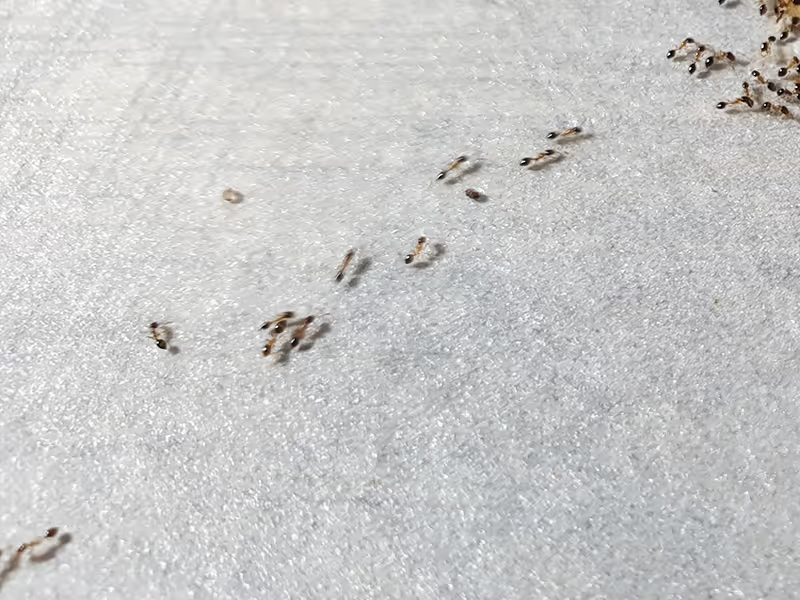
The Most Common Ants in San Diego Homes
Not all ants behave the same way, and that matters more than most people think.
Argentine Ants
Argentine ants are small, light brown, and travel in long trails.
What makes them a difficult pest is how they live. Instead of one colony, they form large networks with multiple queens. That’s why activity can feel widespread or sudden.
Carpenter Ants
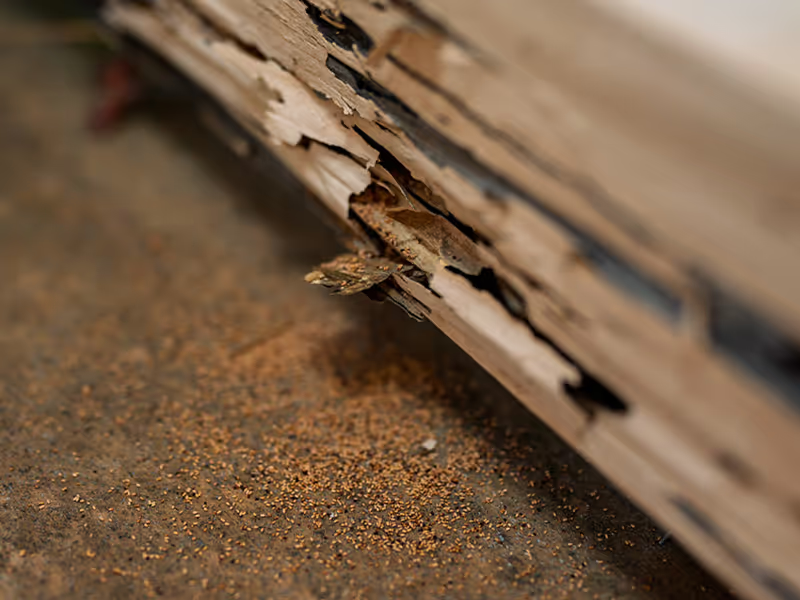
Carpenter ants are larger and less common, but they can cause damage over time. They tunnel through wood to build their nests, which can become a problem if activity goes unnoticed.
Odorous House Ants
If you’ve ever crushed an ant and noticed a strong smell, odorous house ants are likely what you’re dealing with. These ants are drawn to moisture, which is why they often infest kitchens and bathrooms.
Little Black Ants
Little black ants are tiny and easy to miss at first. They usually live outdoors but will come inside once they find a steady food source.
Why Ants Show Up—and Where You’ll Usually See Them
Ants aren’t random. When they move into your home, there’s usually a clear reason behind it. Something is attracting them.
They’re always looking for food, water, and a place to settle. Once one ant finds something, it leaves behind a scent trail that leads others to the same spot.
That’s why what starts as one or two ants can quickly turn into a steady line.
In a lot of the homes we visit, the ants people see inside are just a small part of a much larger colony outside.
In San Diego homes, we often see ants indoors when there’s easy access to food, moisture around sinks or plumbing, or small gaps that allow them to get inside your home.
Where you see them usually depends on what they’re after.
Kitchens are the most common place homeowners notice ants, especially around counters, sinks, and pantry areas where food is easy to find. Bathrooms are another hotspot because of consistent moisture around sinks, tubs, and plumbing lines.
You may also notice ants along baseboards, near doors and windows, or in areas where they’re entering from outside.
If you’re trying to track where they’re coming from, it helps to know the common places ants show up inside a home.
When ants start showing up in multiple areas of the home, it’s usually a sign the colony is nearby—or in some cases, inside the structure. We see this in situations where ants are nesting inside walls in San Diego homes.
How Weather Affects Ant Activity in San Diego
Ants are active year-round in San Diego, but their behavior changes depending on what’s happening outside.
During hot, dry stretches, ants start looking for water. That’s when homeowners are more likely to spot them in kitchens, bathrooms, and around sinks.
We also see noticeable increases during Santa Ana wind conditions. The hot, dry air pushes ants to search for moisture indoors, and strong winds can disrupt where they’re nesting outside. When that happens, they relocate—and sometimes that relocation leads straight into your home.
After rain, activity can increase as well. When the ground becomes saturated or conditions shift, colonies may move, which can bring ants indoors unexpectedly.
In coastal areas, activity tends to stay more consistent throughout the year. Inland areas like El Cajon and La Mesa usually see more noticeable spikes, especially during heat waves.
Most of the time, when ants show up, it’s tied to what’s happening outside—not just what’s happening inside your home.
Why Ant Problems Can Be Hard to Solve
Ants can be surprisingly persistent.
What most people run into is this: they treat the ants they see, and it helps for a short time—but then ants return.
That’s because the colony itself hasn’t been addressed.
With species like Argentine ants, you’re often dealing with multiple queens and large, connected colonies. So even if some of the activity is reduced, the rest of the colony continues.
This is also why most DIY approaches don’t hold up long-term. They may reduce activity temporarily, but they don’t usually solve the source of the problem.
If you’re not sure what’s causing the activity in your home, we can take a look. Schedule a free inspection, and we’ll send out a local technician.
What Helps Reduce Ant Activity
There are a few steps that can make your home less attractive to ants.
Keeping food cleaned up and stored properly helps limit what they’re looking for. Fixing leaks and reducing moisture removes another major attractant. Sealing small gaps around doors, windows, and the foundation can also make it harder for ants to get inside.
If you want a starting point, it helps to understand how to inspect your home for ant activity and entry points.
These steps can help reduce activity, but once ants are established, it usually takes a more complete approach to fully deal with the problem.
How We Handle Ant Problems in San Diego Homes
Every home is different, so the approach needs to match what’s actually going on.
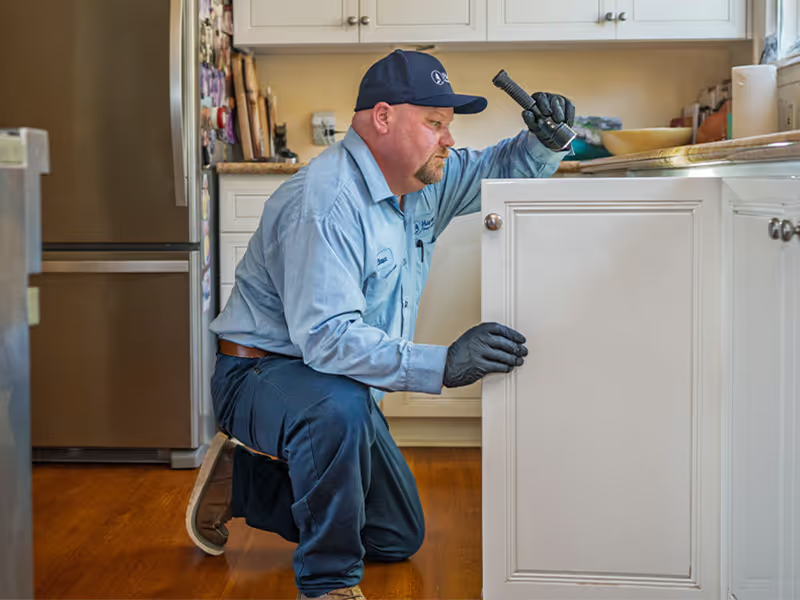
We start with a free inspection. One of our licensed pest professionals will look at your home and yard, identify the type of ant, and track down where they’re coming from. We also look at the conditions that are attracting them.
From there, we walk you through what we found and recommend a plan that fits your home.
Once you’re ready, we get started right away. Your service is handled by a licensed pest control professional who understands ant problems in San Diego homes.
For many homeowners, ongoing service is what keeps ants from becoming a bigger issue. Because ants are active year-round here, regular treatments help keep new activity from building up.
See how we protect San Diego homes with our residential pest control service.
Why Homeowners Call Harbor Pest Control
We’re a local, family-owned company that’s been serving San Diego since 1948.
Homeowners call us because they want a real solution—not a temporary fix. They want someone who understands how pests behave in this area and how to deal with them long-term.
We offer free inspections, next-day service when you call before noon Monday through Friday, and customized plans built around your home.
Ant FAQs for San Diego Homeowners
How do ants get into my house in the first place?
Most ants get in through very small gaps around doors, windows, and along the foundation. In San Diego homes, we also see them come in around plumbing penetrations, utility lines, and where exterior walls meet patios or walkways—especially with slab foundations.
Even homes that look well-sealed can have enough access points for ants to find their way inside.
Are certain homes more likely to get ants?
Yes. Some homes are more likely to see ant activity than others. In San Diego, we also see higher ant pressure in homes near open land, canyons, or coastal areas where colonies are more established.
Sprinklers, drip lines, and plants close to homes can also make it easier for ants to nest nearby and move indoors.
Is it normal to see ants even if my home is clean?
It is. Clean homes still get ants. While food can attract them, water is often the bigger factor—especially during dry conditions in San Diego.
We regularly see ant activity in very clean homes, particularly around kitchens, bathrooms, and other areas where moisture is present.
Get Rid of Ants in Your San Diego Home
If ants are showing up in your home, there’s usually a reason—and it’s not something that typically goes away on its own.
At Harbor Pest Control, we will identify where the ants are coming from, treat the problem properly, and put a plan in place to help keep your home protected year-round.