Key Takeaways
- Drywood termites live entirely inside dry wood and don't need soil contact or excess moisture, which sets them apart from subterranean termites.
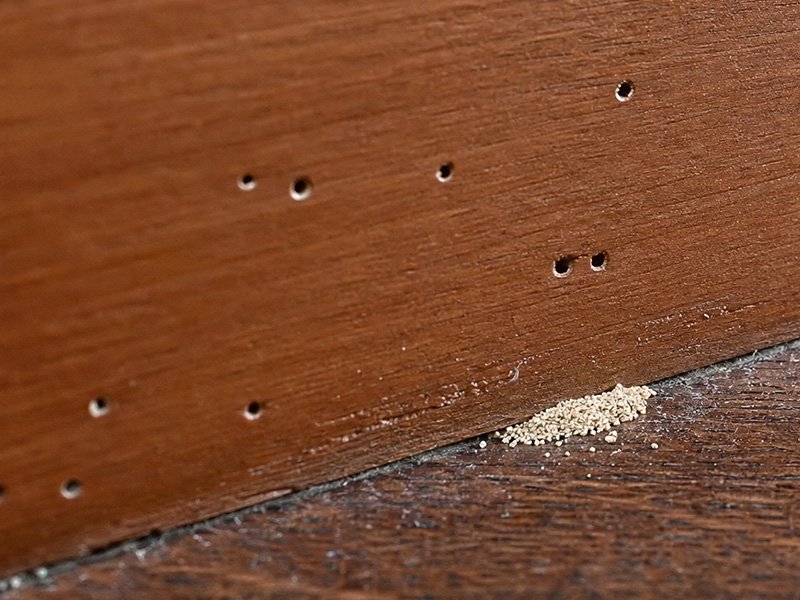
- The most common signs are discarded wings, pellet-like droppings (frass), small "kick-out" holes, and wood that sounds hollow when tapped.
- Because colonies are small and slow-moving, infestations can go unnoticed for years before damage becomes obvious.
- Not every sign means termites are still active — fresh, uniform frass that keeps piling up points to a live infestation, while dusty, faded frass usually means old, resolved damage.
- Subterranean termites are a completely different problem — different signs, different treatment — so don't assume it's drywood termites without checking.
- Professional treatment, whether a targeted spot treatment or whole-structure fumigation, is the most reliable way to fully eliminate a drywood termite colony.
What Are Drywood Termites?
Drywood termites are exactly what they sound like: termites that live inside dry, sound wood rather than in the soil. That includes structural framing, attic beams, window and door casings, baseboards, and even furniture. Because they don't need a moisture source or soil contact to survive, they can turn up almost anywhere there's exposed or lightly protected wood — including areas subterranean termites would never bother with.
In San Diego, drywood termites (specifically the western drywood termite) are considered the second most common termite problem behind subterranean termites, and our warm coastal and inland climate gives them a long active season. Colonies tend to be smaller than subterranean colonies, and the damage builds up more gradually, but it's still real damage — and it usually goes unnoticed longer, simply because there's no muddy tube on the wall pointing you to the problem.
Signs of Drywood Termites
Drywood termites hide inside the wood they're eating, so you're rarely going to see the insects themselves. Drawing on Harbor Pest Control's field experience since 1948, along with guidance from the UC Statewide IPM Program's Pest Notes on drywood termites, here's the evidence to watch for:
- Discarded wings: After a swarm, reproductive termites shed their wings once they've found a new spot to nest. You'll often find small piles of them near windowsills, doors, or light fixtures, especially in late summer and early fall.
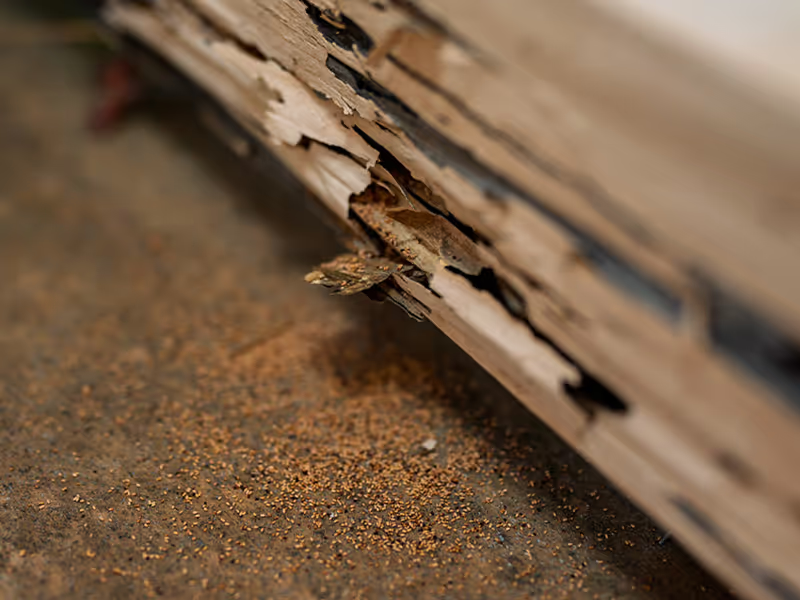
- Frass (droppings): Drywood termites push their waste out of the wood through tiny openings, leaving behind small, sand- or pellet-like mounds. If you look closely, the pellets have a distinct six-sided shape — a telltale sign it's drywood termites and not another pest.
- Kick-out holes: These are the pinhole-sized openings termites use to push frass out of infested wood. They're easy to miss unless you're looking for them, often no bigger than the tip of a pencil.
- Hollow or blistered wood: Tap on wood trim, framing, or furniture — if it sounds hollow or papery instead of solid, termites may have eaten away the inside while leaving the surface intact.
- Sagging or damaged wood surfaces: In more advanced infestations, wood may look slightly warped, crumble at the edges, or give way under light pressure.
- Faint clicking or rustling sounds: It's not common, but in larger infestations, you may occasionally hear soft sounds coming from inside walls or furniture as termites move around.
None of these signs on their own guarantee an infestation — old wings can blow in from outside, and plenty of wood just sounds a little hollow. But if you're noticing more than one of these, it's worth having a professional take a look before assuming it's nothing.
Active Infestation or Old Damage?
Not every sign means termites are still there. Drywood termites can leave damage that looks alarming but is actually old — left over from a past infestation that was already treated, or from a colony that simply moved on.
Frass is usually the easiest way to tell the difference. Fresh frass tends to be uniform in color and keeps building up under the same kick-out hole over days or weeks, which means termites are still feeding nearby. Old frass looks dusty or faded, crumbles easily between your fingers, and the pile stops growing — a sign the activity has stopped.
The same logic applies to wings: a fresh pile after a warm evening suggests a recent swarm, while damage that hasn't changed since the last time you noticed it is more likely leftover from before.
If you can't tell which one you're looking at, that's reason enough to have it checked rather than guess. Harbor Pest Control can confirm whether a sign points to active termites or just old, already-resolved damage.
How Subterranean Termites Are Different
San Diego homes deal with two main types of termites, and they don't behave the same way. Subterranean termites nest in the soil, need consistent moisture to survive, and travel to their food source through pencil-width mud tubes built along foundations and walls. Drywood termites skip the soil entirely and set up shop directly inside the wood itself, which means there's no mud tube to spot and no moisture requirement to give them away.
That difference matters because the signs — and the treatment — aren't the same for both termite species.
Our guide to signs of subterranean termites in San Diego breaks down what to look for and how Harbor specifically treats that type of infestation.
What to Do If You Spot These Drywood Termite Signs
If you've noticed frass, kick-out holes, discarded wings, or other signs of drywood termite activity around your home, don't wait to see if it gets worse — drywood termite colonies are slow, but they don't go away on their own. Over-the-counter sprays typically only reach the surface, while the colony stays protected deep inside the wood.
Harbor Pest Control offers drywood termite control services throughout San Diego County, from spot treatments for localized problems to whole-structure fumigation for more established infestations. Our team has been identifying and treating drywood termites in San Diego homes since 1948, so we know the specific wood, weather, and building conditions that tend to attract them in this area.
FAQs About Drywood Termites in San Diego
How common are drywood termites in San Diego?
Very common. San Diego's warm, dry climate is well-suited to drywood termites, and they're considered one of the two termite species local homeowners are most likely to encounter, alongside subterranean termites.
Can I treat drywood termites myself?
Not effectively. Drywood termites live inside the wood they're feeding on, so store-bought sprays and foams generally only affect the surface, not the colony itself. Professional treatment is the most reliable way to fully eliminate an infestation.
Do I have to leave my home for drywood termite treatment?
Only for whole-structure fumigation, which requires residents and pets to vacate temporarily for safety. Smaller, localized infestations can often be handled with spot treatments that don't require you to leave.
How much does drywood termite treatment cost in San Diego?
It depends on the size of the infestation and the treatment method needed, which is why Harbor Pest Control starts with a free inspection to give you an accurate recommendation rather than a guess.
Schedule Your Free Termite Inspection
If you're not sure whether what you're seeing is drywood termites, subterranean termites, or something else entirely, that's exactly what a free inspection is for. Contact Harbor Pest Control or call (888) 586-4816 to schedule one.