Why a Swarm Shows Up in the First Place
A termite swarm is hard to miss. Dozens or sometimes many more winged termites can appear within a relatively short period.
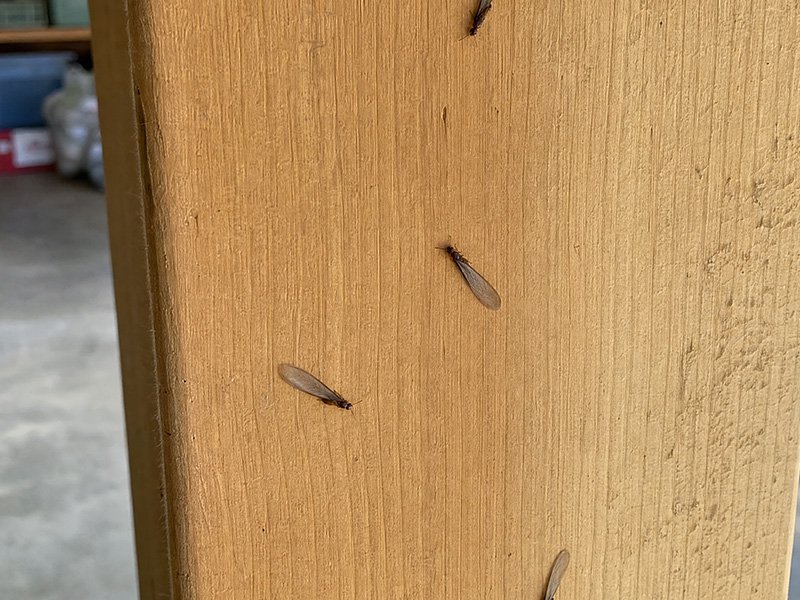
Swarmers—the winged reproductive termites formally called alates—leave an established colony to pair off and potentially start new colonies elsewhere. If swarmers are actually emerging from structural wood inside your home or garage, that's a strong reason to have that area inspected for an active termite infestation.
That's different from simply finding a few winged termites that may have flown into an open garage from somewhere outside.
The swarmers themselves aren't the main concern. The important question is whether they came from an established colony inside the structure. If you see them emerging from a wall, beam, window frame, or another part of the structure, don't just sweep them up and forget about them.
The Signs Pointing to Drywood Termites
A swarm coming from garage framing can tell you termites may be active in or around that part of the structure, but the location by itself does not tell you which type of termite is responsible. Both drywood and subterranean termites can infest wood above ground.
What makes drywood termites a strong possibility in this case is the timing and any additional evidence around the wood.
They swarmed in late summer. Drywood termites commonly swarm in Southern California in late summer and fall. That makes the timing consistent with their normal seasonal activity, although season alone is not enough for a positive identification.
The swarmers themselves can provide clues. A termite professional can examine the insects, or clear photos of them, for physical characteristics that help distinguish drywood termites from other termites found around San Diego.
The Sign That Can Strengthen the Case
For this homeowner, the swarm and timing narrow down the possibilities. Another important thing to look for is frass.
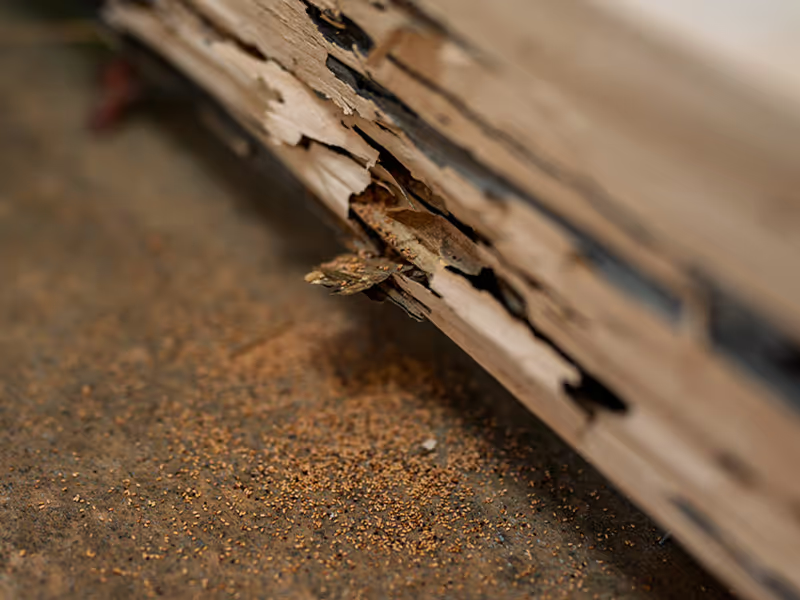
Drywood termites keep their galleries clear by pushing fecal pellets out through tiny openings in the wood, often called kick-out holes. The result can be small piles of hard, grain-like pellets resembling coarse sand beneath infested wood. Viewed closely, individual drywood termite pellets have a distinctive six-sided shape.
These pellet piles are highly characteristic of drywood termite activity and are one of the strongest clues an inspector will look for. Subterranean termites don't leave the same characteristic piles of drywood termite pellets; their activity is more commonly associated with soil connections and mud tubes.
In this garage, the area directly beneath the exposed framing would be an important place to check. If pellets reappear after the area has been cleaned, that can be useful evidence of current activity, although an inspector should still confirm what you're seeing.
Frass is one of the clearest signs, but it isn't the only one. Discarded wings and tiny pellet-expulsion openings may also be present, while damaged wood can sometimes sound hollow when tapped.
Our full guide to the signs of drywood termites covers what else to look for and how old evidence can differ from signs of current activity.
What to Do If You Find a Termite Swarm
If you catch a swarm happening, take a few photos or a short video before cleaning it up. Try to capture both the insects and the exact location where they appear to be emerging. That information can be helpful during an inspection.
Then schedule a professional termite inspection.
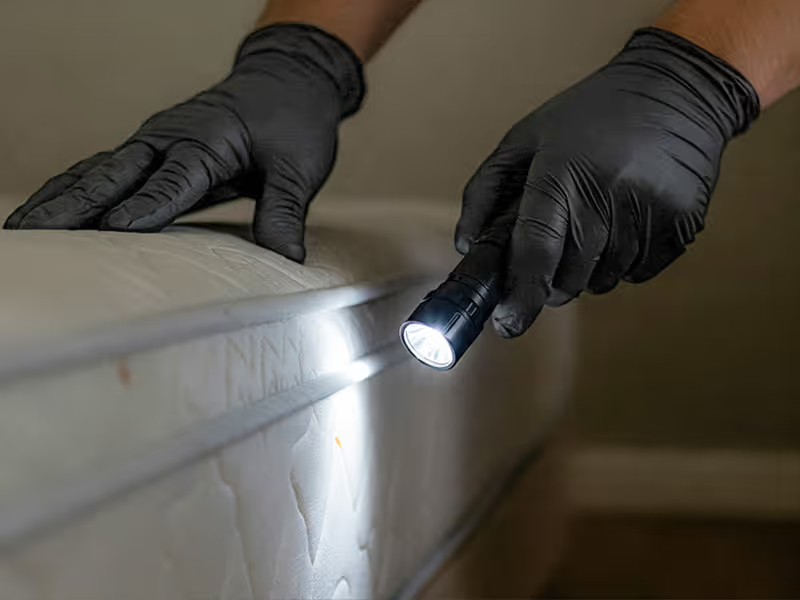
A licensed inspector can identify the termites, look for additional evidence of activity, evaluate the affected areas, and determine what treatment options make sense. That's especially important with drywood termites because colonies remain concealed inside the wood and the extent of an infestation isn't always obvious from what you can see.
When in doubt, let Harbor take a look. Call (888) 586-4816 to schedule an inspection.
How Harbor Treats Drywood Termites
Once the infestation has been properly identified, the appropriate treatment depends on where the termites are located and how extensive the activity appears to be.
Harbor Pest Control treats drywood termites and recommends the treatment that fits the situation rather than assuming every infestation needs the same approach. Our team will explain what we find, what we recommend, and why. For qualifying properties, we also offer a termite re-treatment warranty.
Learn more about our termite control services, or schedule your free termite inspection.
San Diego Is Prime Drywood Termite Territory
Drywood termites are well established throughout Southern California, including the San Diego area, so they're a familiar concern for local homeowners.
The difficult part is that a colony can remain concealed inside structural wood for years before something finally gives it away. Sometimes it's a small pile of pellets. Sometimes it's discarded wings. And sometimes, as in this garage, it's a swarm that suddenly makes the activity impossible to overlook.
Finding the problem sooner can help limit additional damage.
Family-owned and operating in San Diego since 1948, Harbor Pest Control has spent decades helping local homeowners identify drywood termites and determine the appropriate treatment.
Saw a swarm in your garage? Don't wait to find out what it means. Contact Harbor Pest Control or call (888) 586-4816 to schedule your free termite inspection.
This article is for general educational purposes. Termite identification and treatment should always be confirmed by a licensed inspector who can evaluate your specific property.