1. Peppermint Oil
Peppermint oil is probably one of the best-known home remedies for mice and rats. The idea is simple: rodents supposedly dislike the strong smell, so cotton balls soaked in peppermint oil are placed around areas where they've been seen.
But an unpleasant smell isn't a rodent control plan.
Even if a strong odor temporarily discourages a mouse or rat from approaching a particular area, it doesn't eliminate rodents already inside the structure. They may simply use another route or remain in areas where the smell doesn't reach.
That's particularly important when rodents are moving through wall voids, attics, crawl spaces, garages, or other protected areas. Putting peppermint oil around the kitchen won't tell you where they're hiding or how they're getting into your San Diego home in the first place.
2. Mothballs
Mothballs are another product sometimes recommended online for repelling mice and rats because of their strong odor.
That's not what they're intended for.
Mothballs are pesticide products designed to protect stored clothing and fabrics from clothes moths and, depending on the product, other fabric pests. They are typically meant to be used in clean, tightly enclosed, or airtight storage spaces such as garment bags, trunks, chests, or certain storage closets, according to the product label.
They are not intended to be scattered through an attic, crawl space, garage, or other parts of the home as a general rodent repellent.
So while the strong smell may make mothballs seem like a logical way to discourage mice or rats, they aren't a reliable solution for getting rodents out of your home. As with any pesticide product, the U.S. Environmental Protection Agency recommends following the label directions for where and how to use the product.
3. Baking Soda
Another internet remedy involves mixing baking soda with food in hopes that a mouse or rat will eat it.
The theory usually goes that baking soda will react inside the rodent's digestive system, create gas, and kill it because rodents supposedly can't release the gas effectively.
There's a big difference between an internet theory and a dependable method of rodent control.
Professional rodent management guidance does not rely on homemade baking soda mixtures to eliminate infestations. You also have no reliable way of knowing whether rodents will consume enough of a homemade mixture or whether they'll eat it at all.
There's another problem with DIY mixtures intended to kill rodents: even if one did result in a rodent dying, you wouldn't necessarily know where it went afterward. A mouse or rat could retreat into a wall void, attic, crawl space, or another inaccessible area before dying, potentially leaving you with an odor that's difficult to locate and a carcass you can't easily remove.
Leaving homemade bait mixtures around the house can also create unnecessary risks if children or pets can reach them.
4. Instant Potato Flakes
Instant mashed potatoes or potato flakes are other DIY ideas that circulate online. Claims vary, but usually the theory is that a rodent will eat the dry flakes, drink water, and the food will expand inside its stomach.
It may sound convincing when you read it online, but instant potatoes are food, not a proven rodent control product.
And the same problem applies here as with other homemade mixtures intended to kill rodents. Even if a rodent were to die after consuming something you've put out, you have no control over where it goes first. If it dies somewhere you can't reach, the resulting odor can create an entirely new problem.
There is no reason to depend on potato flakes when dealing with an active mouse or rat problem. Even if rodents eat what you've left out, that doesn't mean you've eliminated them from the home.
5. Ultrasonic Rodent Repellents
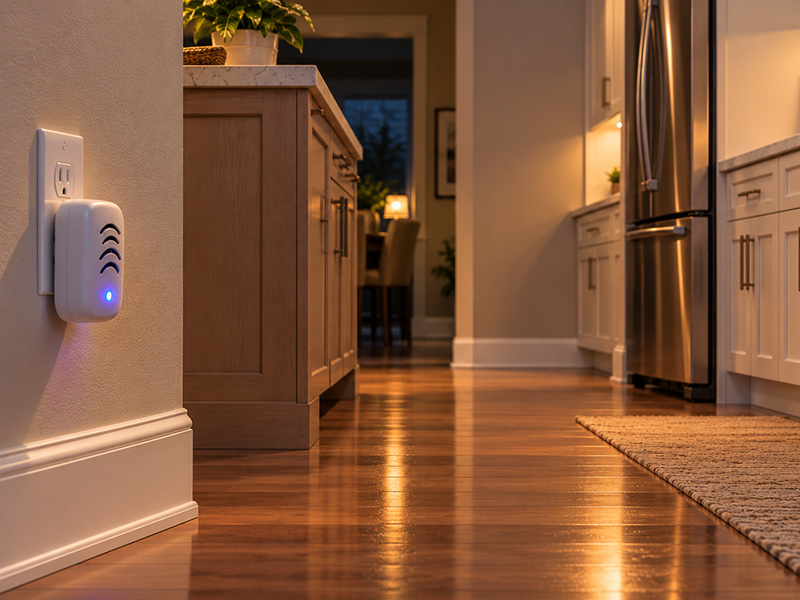
Plug-in ultrasonic devices promise an especially appealing solution: plug one into an outlet and use high-frequency sound to drive mice and rats away.
Unfortunately, rodents don't make it that easy.
According to the University of California Statewide Integrated Pest Management Program, mice can initially be frightened by unfamiliar sounds but become accustomed to hearing them repeatedly. Ultrasonic sound is also directional, loses intensity with distance, and doesn't penetrate well behind objects.
That becomes particularly important when rodents are inside walls, cabinets, attics, crawl spaces, or other protected locations.
UC IPM concludes there is little evidence that sound, magnetic, or vibrational devices will drive established mice or rats from buildings or provide effective rodent control.
6. Getting a Cat
What about nature's mouse catcher?
Some cats are excellent hunters. Others will watch a mouse run across the room and go back to sleep.
Even a cat that catches mice shouldn't be expected to eliminate a rodent problem in your home.
UC IPM notes that while some cats and dogs catch and kill mice and rats, there are few situations in which pets adequately control a rodent population. Rodents can hide and reproduce in areas a cat simply can't reach.
That's especially relevant with the rodents Harbor encounters around San Diego homes. House mice can take advantage of small openings and concealed spaces, while roof rats are skilled climbers that may access upper portions of a structure. Norway rats, on the other hand, are more commonly associated with ground-level areas and burrows.
Your cat can't inspect a crawl space, follow a rat's route along a roofline, or determine where a mouse is getting through the exterior of your home.
If your cat catches a mouse, take the sighting seriously, but don't give your cat responsibility for pest control.
What About Mouse and Rat Traps?
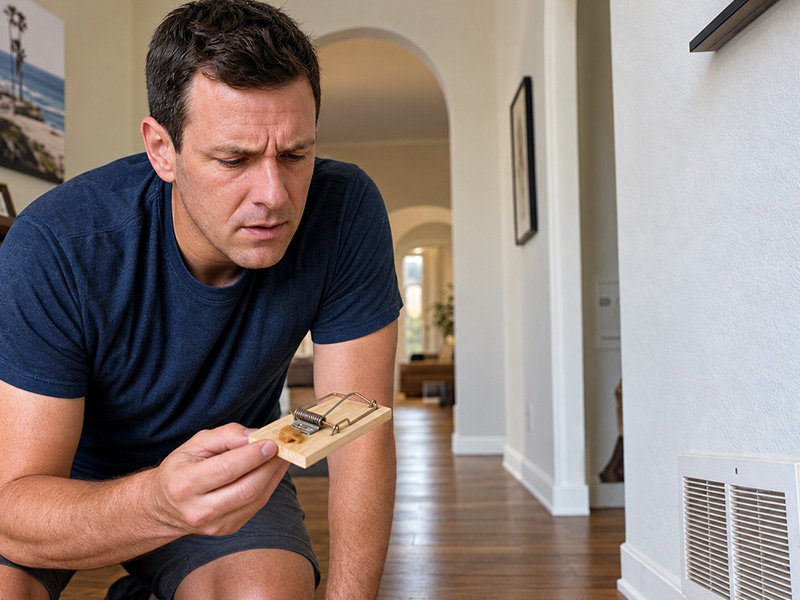
Traps are different from the home remedies above because trapping is a legitimate method of rodent control.
In fact, professional rodent control programs often include trapping. However, successful trapping depends on factors such as the rodent involved, where it's traveling, where activity is concentrated, and where traps are placed.
So if you've put out a trap, don't assume it belongs in the same category as peppermint oil or an ultrasonic plug-in.
Trapping can work, but how it fits into resolving an entire rodent problem depends on what's happening in the home.
What Actually Helps With Rodent Problems?
Some of the advice lumped in with DIY rodent remedies is actually good. It just serves a different purpose.
Keeping food in secure containers, cleaning up accessible food, managing garbage, reducing clutter, and limiting other food and shelter opportunities can make a property less attractive to rodents.
Finding and addressing openings around a home is also an important part of rodent prevention. Mice can squeeze through surprisingly small openings, while rats can take advantage of gaps around rooflines, vents, utility penetrations, doors, and other vulnerable areas.
Our guide to Rodent Proofing Your San Diego Home takes a closer look at common entry points and steps homeowners can take to make it harder for rodents to get inside.
These measures aren't homemade ways to "kill off" rodents. They're parts of a broader approach to keep rodents out.
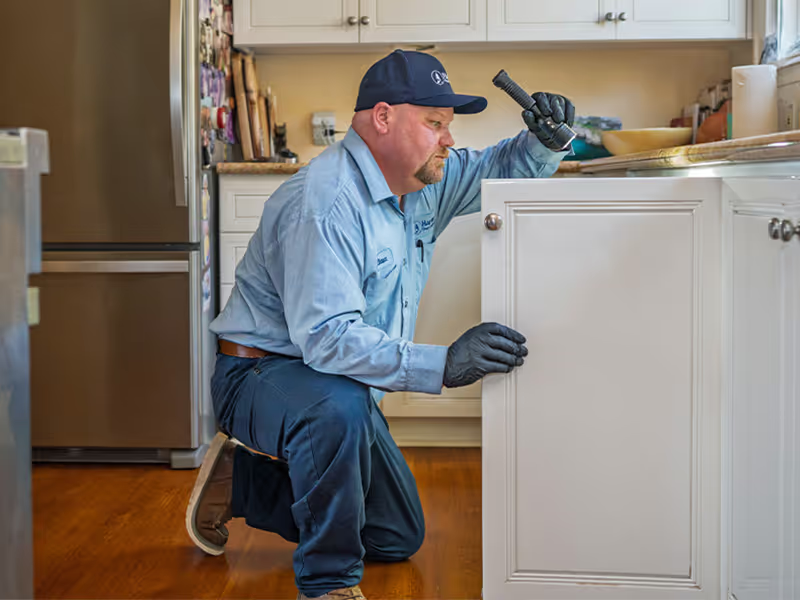
When Harbor technicians inspect a home for rodent activity, the goal isn't simply to focus on the room where a mouse or rat was spotted. An inspection can help determine which rodent is causing the problem, where activity is occurring, and where rodents may be gaining access to the structure.
That's why simply trying one home remedy after another can leave homeowners frustrated while rodent activity continues.
Still Dealing With Rodents in Your San Diego Home?
If peppermint oil, plug-in repellents, or another home remedy haven't solved your rodent problem, stop experimenting.
Harbor Pest Control provides home pest control in Coronado, La Mesa, Lakeside, and throughout the San Diego area. Our general pest plan covers many common household pests, and rodent coverage can be added when mice or rats are a problem. We'll identify the pest problem, treat the existing infestation, and provide ongoing service based on your home's needs.
If you're seeing rodents, hearing activity inside your home, or simply aren't sure whether the steps you've taken have solved the problem, contact Harbor Pest Control to schedule an inspection.
Originally published November 4, 2019. Updated September 29, 2026, with current information about common DIY rodent remedies and why they may not solve a mouse or rat problem.