

If It Looks Like Sawdust, Carpenter Ants May Be the Problem
A small pile that looks like sawdust can be one of the most confusing signs.
Carpenter ants can leave behind debris that looks like tiny wood shavings. They do not eat wood the way termites do. Instead, they chew into wood to create nesting space and push the leftover material out. That debris is often called frass.
But the frass is not the damage. It is a clue.
Carpenter ant debris may look uneven or shaving-like. It may also include tiny insect parts or other material from the nesting area. Homeowners may notice it below window trim, along baseboards, in garages, near wall voids, or around damp exterior wood.
Carpenter ants are often connected to moisture. Around San Diego homes, they may take advantage of wood near leaky windows, plumbing issues, roof leaks, shaded trim, fascia boards, patio doors, or other areas where wood has softened.
If you find sawdust-like debris and large ants nearby, carpenter ants are a likely suspect.
But they are not the only possibility.
Drywood Termite Pellets Can Look Like Sand
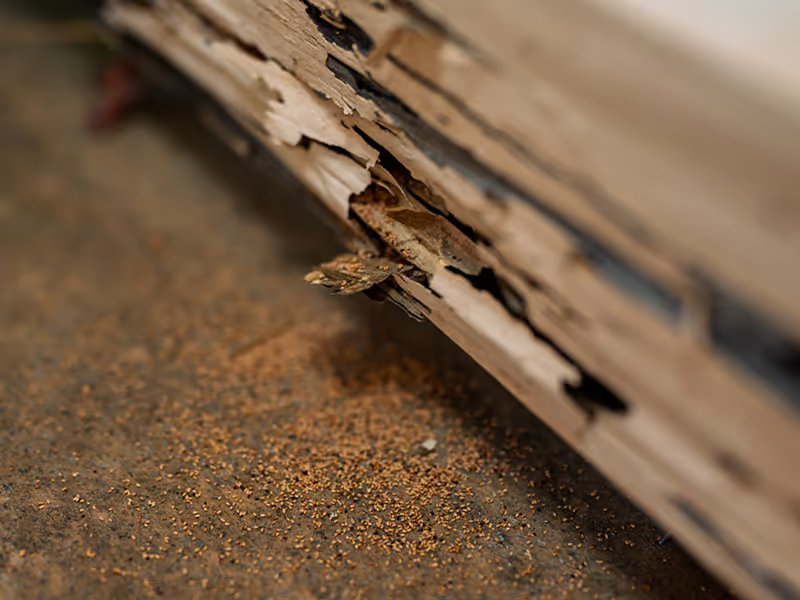
Drywood termite pellets are easy to mistake for sawdust if you are not used to seeing them.
They are small, hard, and often look like grains of sand, pepper, coffee grounds, or tiny seeds. They may collect in a neat little pile below a window frame, door frame, attic beam, eave, fascia board, piece of furniture, or another wood area.
Drywood termites live inside wood. They do not need soil contact, and they do not build the mud tubes associated with subterranean termites.
That is why drywood termite activity can show up in places that do not seem connected to the ground. You may find pellets under a window, near attic framing, below exposed beams, or around exterior trim.
Finding pellets does not automatically tell you how far the problem has spread. It means the area should be inspected to confirm whether drywood termites are active.
If You See Mud Tubes, Think Subterranean Termites
Mud tubes are a different kind of clue.
They often look like narrow, dirt-colored lines or tunnels. You may see them on a foundation, along a garage wall, around a plumbing penetration, inside a crawl space, or near an area where the home meets the soil.
Mud tubes are associated with subterranean termites. These termites live in the soil and use the tubes to travel into a structure while staying protected.
Carpenter ants do not build mud tubes. Drywood termites do not need them.
Subterranean termite damage often remains hidden because these termites feed inside wood, behind walls, under flooring, or in other areas homeowners cannot easily see. By the time a wall sounds hollow, paint blisters, or trim gives way, activity may have been present for a while.
Not every mud tube is active. But if you see something that looks like a tube on the foundation, in the garage, or in a crawl space, Harbor can inspect it and confirm whether subterranean termites are active.
Soft Wood May Be a Moisture Problem First
Soft wood can make homeowners think of termites right away.
Sometimes termites are involved. But moisture may be the first issue.
Wood around bathrooms, kitchens, windows, patio doors, rooflines, and exterior trim can soften when water gets in or stays trapped. Plumbing leaks, roof leaks, worn caulking, irrigation overspray, poor drainage, and shaded areas can all keep wood damp longer than it should be.
That damp wood can attract carpenter ants. It can also make existing termite damage more noticeable. In some cases, the wood may simply be water-damaged or decayed without active pest activity.
This is why soft wood does not tell the whole story.
The real question is not just, “What damaged this wood?”
It is also, “Is something active here right now?”
That answer changes the next step. Active carpenter ants need treatment. Active termites need treatment. Moisture damage may require repairs or correction of the water source. Old damage may need repair, but not a pest treatment.
Old Damage and Active Damage Are Not the Same
This is one of the biggest reasons wood problems are hard to sort out.
A home can have damaged wood without an active infestation.
Maybe drywood termites were treated years ago. Maybe a leak softened the trim before it was repaired. Maybe old subterranean termite damage is still visible. Maybe carpenter ants were active in damp wood before the moisture problem was corrected.
Old damage still matters. It may need repair. It may also show that the home had conditions pests liked before.
But old damage and active damage are not the same problem.
Harbor looks for current signs: fresh debris, active mud tubes, live insects, termite pellets, moisture conditions, damaged galleries, and other clues that help separate what is happening now from what may have happened before.
How Harbor Handles Carpenter Ants and Termites in San Diego Homes
Harbor does not treat every wood concern the same way. That is the advantage of starting with a free pest inspection.
Our technicians look at the signs you found, check for active pest activity, and explain whether the issue appears to be carpenter ants, drywood termites, subterranean termites, or another condition affecting the wood.
From there, we match the treatment to the problem.
If carpenter ants are active, Harbor offers year-round home pest control services that target the infestation and help reduce the chance of re-infestation.
If subterranean termites are active, Harbor uses Termidor® HP as part of our professional termite control service to eliminate the active colony and provide long-lasting protection around the home after the initial treatment.
If drywood termites are active, Harbor will recommend the best treatment based on what the inspection reveals. That may include localized treatment, borate application, or whole-home fumigation.
The goal is simple: identify what is active, explain the treatment options, and help you protect your home with the right plan.
Our local team helps homeowners get clear answers when something around the wood in their home does not look right.
FAQs About Carpenter Ants, Termites, and Wood Damage in San Diego Homes
Can carpenter ant damage look like termite damage?
It can look similar to a homeowner at first, especially when wood sounds hollow or debris appears nearby. Carpenter ants tunnel into wood to create nesting space, while termites feed on wood. Drywood termites and subterranean termites also leave different signs. A professional inspection is the best way to tell the difference.
Are drywood termites just as destructive as subterranean termites in San Diego?
Subterranean termites have the potential to cause more serious structural damage because their colonies are larger and soil-based. In San Diego, though, drywood termites are responsible for much of the termite damage homeowners actually find. That is why an inspection matters before choosing a treatment.
Can carpenter ants and termites be in the same house?
Yes. A San Diego home can have more than one issue at the same time. Carpenter ants may be active around moisture-damaged wood, while termites may be present in another area. That is why Harbor looks at the full picture rather than assuming that one sign explains everything.
Do I need fumigation if I find drywood termite activity?
Not always. Treatment depends on the location and extent of the activity. Some drywood termite problems may be treated locally. Others may require fumigation. Harbor can inspect and explain which option makes sense.
Can moisture damage be mistaken for termite damage?
Yes. Soft wood, bubbled paint, and sticking doors can be related to moisture, termites, old damage, or more than one issue. Harbor can inspect the area and look for signs that help determine whether pests are active or the damage is moisture-related.
Get Help With Wood-Damaging Insects in San Diego
If you are concerned about wood-damaging insects in your home, contact Harbor Pest Control to schedule a free pest inspection.
You do not have to know whether the issue is carpenter ants, drywood termites, subterranean termites, or something else before you call. Harbor will inspect the signs, explain what we find, and recommend the right next step if pest activity is found.
Since 1948, Harbor Pest Control has been protecting San Diego, Chula Vista, Imperial Beach, La Mesa, El Cajon, and Serra Mesa, and the surrounding communities.
If something around the wood in your home does not look right, schedule your free pest inspection today and let Harbor take a look.