
When Do Stinging Insects Start Building Nests in San Diego?
In San Diego’s mild climate, paper wasps and other stinging insects can begin building nests as early as late spring. By summer, colonies are growing quickly and wasp nests are expanding.
Early on, you may only see a few wasps flying near a roofline, patio cover, porch ceiling, or light fixture. That activity may not seem like much at first. But if the insects keep returning to the same spot, there is likely a nest forming or already established nearby.
That’s why we always encourage homeowners to pay attention to repeated wasp or bee activity. One or two insects passing through the yard may not be an issue. Several insects flying in and out of the same area every day is a different story.
What Attracts Stinging Insects to Your Property?
Wasps and bees are usually drawn to San Diego yards for a few simple reasons: food, water, shelter, and a protected place to build.
Flowering plants and fruit trees can attract bees and wasps looking for food. Outdoor meals, sugary drinks, barbecue residue, and open trash cans can also bring wasps closer to patios, outdoor kitchens, and dining areas.
For nesting, wasps look for protected spots that are sheltered from wind, rain, and heavy activity. Homes with covered porches, layered rooflines, patio covers, pergolas, sheds, and outdoor living spaces often provide plenty of places for nests to get started.
Our technicians can point out specific conditions on your property during an inspection and suggest practical adjustments to make your home less inviting to nesting insects. Combined with ongoing treatment, these changes can help reduce activity around the areas your family uses most.
Where Stinging Insects Build Nests Around San Diego Homes
Our technicians find nests in many of the same places across San Diego properties.
Paper wasps prefer sheltered, elevated areas. They often build under eaves, inside porch ceilings, behind shutters, along patio covers, and around rooflines. They may also nest inside outdoor light fixtures, play structures, sheds, and barbecue grills that haven’t been used in a while.
Mud daubers, another common stinging insect in San Diego, build their distinctive tube-shaped nests on exterior walls, under deck overhangs, inside garages, and around covered entryways. They are generally less aggressive than paper wasps, but their nests still cause concern for homeowners.
Bee activity is also common, especially in neighborhoods with extensive landscaping and flowering plants. Bees may pass through a yard while foraging, but they can also establish hives in wall voids, eaves, chimneys, or utility boxes. These are not situations to guess at. Bee activity inside a wall, eave, or utility space should be inspected and handled by a professional.
In neighborhoods like Coronado and La Jolla, and along the coast, outdoor dining spaces, arbors, and pergolas are common nesting sites. Inland areas like El Cajon, La Mesa, and Santee often see more activity around landscape features, retaining walls, irrigation boxes, sheds, and other protected outdoor spaces.
Why Small Wasp Nests Become Bigger Problems Fast
A small wasp nest may not look urgent at first. You might see it under the eave, near a patio cover, or tucked into a porch corner and think it can wait.
But wasp nests can grow quickly during San Diego’s warmer months. Early in the season, a paper wasp nest may only have a queen and a handful of workers. By midsummer, that same nest can hold dozens of wasps.
As the nest grows, activity around your home becomes more noticeable and more stressful.
You may see wasps moving around patios, front doors, garage entries, play areas, pool areas, or outdoor dining spaces. Larger colonies are also more likely to defend the nest if someone gets too close.
That is why it’s better not to wait. If you see wasps flying in and out of the same spot every day, the nest is probably active. Calling Harbor Pest Control while the nest is still small can make the process simpler and help prevent the problem from growing.
Should You Try to Remove a Wasp Nest Yourself?
We don’t recommend it.
Even small nests can house wasps that will defend the area if they feel threatened. Paper wasps can sting more than once, and for anyone with an allergy, a single sting can become a medical emergency.
Store-bought wasp sprays may kill the wasps you see, but they often miss the rest of the nest. Partially treated nests can leave surviving wasps that become more defensive. Spraying around outdoor dining areas, pools, gardens, or children’s play spaces can also create concerns of its own.
Professional removal is faster, more thorough, and keeps everyone at a comfortable distance from the nest. If the nest is in a hard-to-reach spot — inside a soffit, behind siding, under a roofline, or in a wall void — professional access makes an even bigger difference.
When Should You Call a Professional?
If you’re seeing regular wasp or bee traffic around a specific area of your home, there’s likely a nest nearby. The sooner it’s addressed, the simpler the removal usually is.
A nest that’s the size of a golf ball can often be handled quickly. One the size of a basketball requires more time, more care, and a different level of caution.
You should also call a professional if the nest is near a frequently used area, including:
- Front doors
- Garage entries
- Backyard patios
- Outdoor kitchens
- Play areas
- Pool areas
- Walkways
- Trash storage areas
- Sheds or storage spaces
If anyone in your household has a known allergy to stings, professional removal is especially important. Don’t take chances with a nest near places your family, guests, pets, or neighbors regularly pass through.
How Harbor Pest Control Handles Stinging Insect Nests
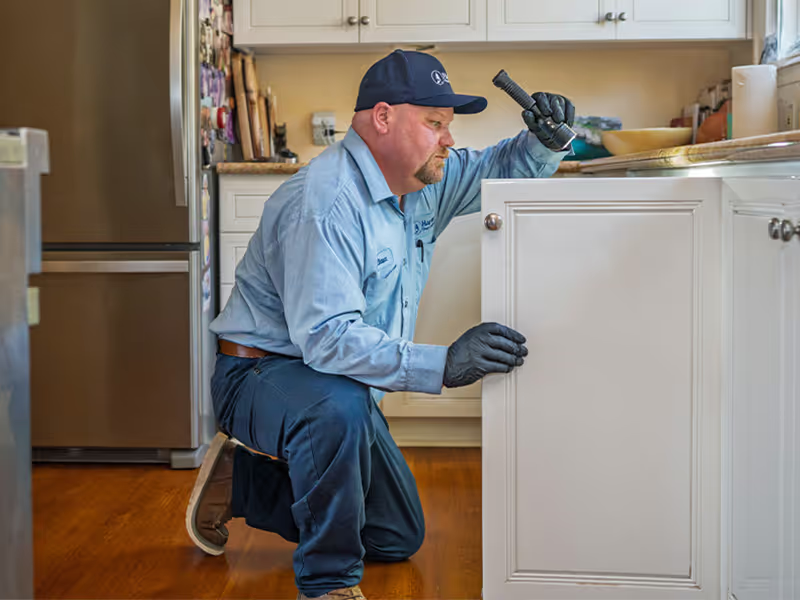
When you contact Harbor Pest Control for bee and wasp control, we start by identifying what you’re dealing with. Paper wasps, mud daubers, and bees each require different approaches. Misidentifying the insect can lead to the wrong treatment and poor results.
Our technicians locate the nest, assess the size and activity level, and use methods appropriate for the species and location.
For paper wasps, this typically involves direct nest treatment and removal. For mud daubers, our technicians can remove the nests and check nearby sheltered areas where more may be forming. However, when bees are established in wall voids or structural spaces, the approach is more involved and typically requires a local beekeeper.
You can also add stinging insect coverage to your General Pest Plan for ongoing protection. That means if new nests appear between quarterly visits, we’ll come out and handle them. Given San Diego’s mild weather and long outdoor season, this type of coverage gives homeowners real peace of mind.
If you’re not sure whether you’re seeing normal insect activity or a nest forming, Harbor can inspect the area, identify what’s happening, and help you decide the next step.
Frequently Asked Questions About Stinging Insects
Will wasps return to the same nesting spot after removal?
Wasps do not reuse old nests, but they may build nearby if the area still offers shelter. Ongoing pest protection can help reduce new nest activity.
Are mud daubers dangerous?
Mud daubers are usually not aggressive and rarely sting. Their nests can still be unwanted around garages, entryways, patios, and other visible areas.
Can stinging insects damage my home?
Paper wasps and mud daubers usually do not cause structural damage. Bee colonies inside walls can create moisture issues, and carpenter bees can damage wood.
Can I knock down an empty wasp nest?
An old, inactive nest may be safe to remove, but only if you are completely sure no wasps are using it. If you see any activity, leave it alone and call a professional.
Do wasps come out more at certain times of day?
Wasps are usually more active during warm, bright parts of the day. You may notice less activity early in the morning or later in the evening.
Don’t Wait for Nests to Grow — Contact Harbor Pest Control
Harbor Pest Control has been protecting San Diego homes and businesses since 1948. If wasps, bees, or other stinging insects are building nests around your property, don’t wait for the nest to get larger.
Contact us online or call to schedule your free inspection. Harbor offers serves San Diego communities south of Highway 56 and offers next-day service availability when scheduling allows, so you don’t have to wait while the nest gets larger.