Why Are Ants Attracted to My House?
Ants are usually attracted to homes for three main reasons: food, water, and shelter. Even small crumbs, moisture from leaks or condensation, and protected nesting areas around the property can draw ants indoors. In San Diego, irrigation, dry weather, and nearby landscaping often encourage ants to start scouting for entry points into houses.
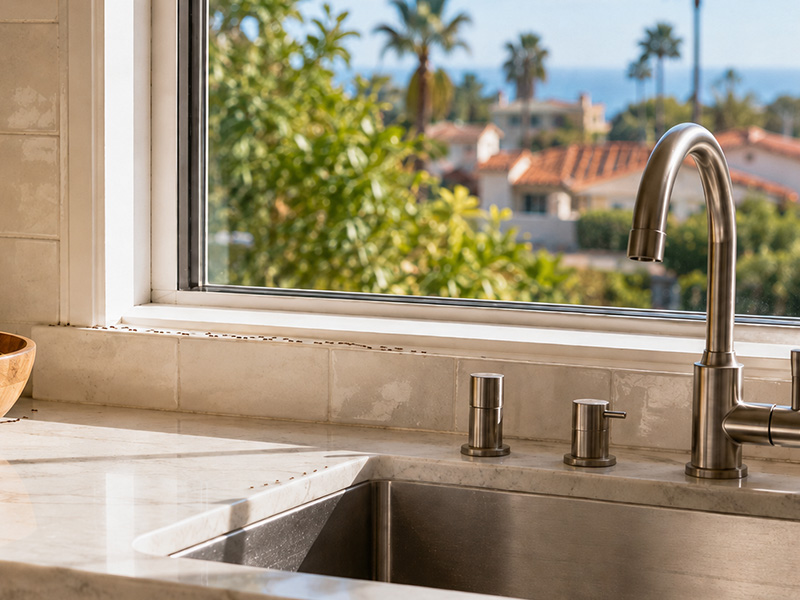
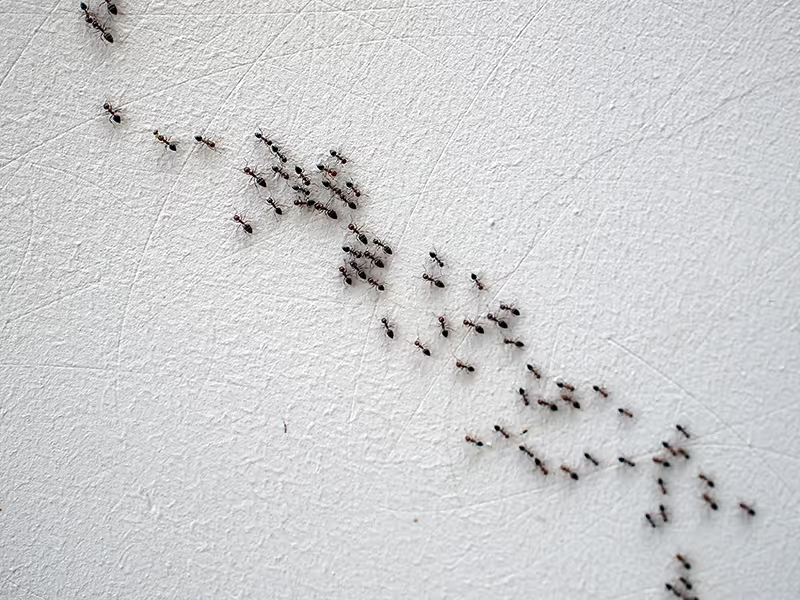
Once one ant finds something useful, it leaves a scent trail so other ants can follow — which is why homeowners often see a full line of ants appear suddenly.
The most common things that attract ants to homes include:
Food
Ants are excellent scavengers, and it doesn’t take much to attract them.
Common food sources include:
- Crumbs on counters or floors
- Sticky residue from drinks or juice
- Pantry spills (flour, cereal dust, sugar)
- Pet food bowls
- Recycling containers
- Grease splatter near cooking areas
Water
Moisture can attract ants just as easily as food.
Common water sources include:
- Slow plumbing leaks
- Condensation under sinks
- Damp cabinets or wall voids
- Bathroom humidity
- Plant saucers
- Drip irrigation near the home
Shelter
Homes also offer safe, protected nesting areas.
Ants commonly nest around:
- Foundations and slab edges
- Hardscape gaps or patio edges
- Moist landscaping near the home
- Wall voids
- Spaces beneath patios or walkways
According to UC’s Integrated Pest Management guidance, ants often enter buildings searching for food, moisture, warmth, or protection from extreme weather.
That lines up closely with what we see during ant inspections throughout San Diego homes.
Why You Suddenly Noticed Ants (Even If Your Home Is Clean)
This is the part that surprises people:
You can keep a very tidy home and still get ants.
Ants don’t need a mess. They only need a small opportunity.
Even tiny amounts of food can attract foraging ants indoors. Once they find something worth reporting back to the colony, you’ll often see a “highway” of ants leading straight to that spot.
In San Diego, we often see spikes in ant activity when:
- Weather suddenly warms up
- Santa Ana conditions dry everything out
- Colonies begin searching for water indoors
- Heavy rain disturbs outdoor nests
- Landscaping irrigation keeps soil consistently moist
After inspecting thousands of homes in the San Diego area, Harbor Pest Control technicians see these patterns repeat year after year.
The “Scout Ant” Pattern: Why One Ant Becomes Fifty Overnight
Here’s the coffee-table explanation of what’s happening.
Ant colonies send out scout ants.
These scouts wander around looking for resources. If one finds something promising, it leaves behind a scent trail that other ants can follow.
That’s why you might see:
One ant today
Twenty ants tomorrow
A full trail the next day
This is also why professional pest control focuses on the colony and the conditions supporting it, not just the ants you see on the counter.
If the colony remains nearby, the problem usually returns.
Does One Ant Mean More Are Coming?
Sometimes seeing a single ant indoors really does mean more are nearby.
Ant colonies send out scout ants to search for food or water. If a scout finds something useful, it leaves behind a scent trail that other ants can follow. That’s why homeowners often see a full line of ants appear shortly after spotting the first one.
However, not every single ant means a full infestation is already inside your home. In many cases, it simply means ants nearby have started scouting for resources.
The Most Common Things That Attract Ants in San Diego Homes
After decades of inspecting homes throughout San Diego, these are the most common issues we find.
Kitchens and Pantries
Kitchens are the most common place homeowners notice ants.
Even kitchens that appear clean can still have attractants like:
- Sticky residue in or around the trash/recycling area
- A “clean” counter that still has invisible sugar/juice residue
- Pantry spills (flour, cereal dust, sugar, crumbs)
- Pet food bowls or storage bins
- Cooking grease film near the range or backsplash
If you’re currently seeing ants in the kitchen, identifying the species can make a big difference in long-term control.
Our San Diego pest identification guides can help you narrow it down. And if you’d rather skip the guesswork, Harbor technicians can identify the species during an inspection.
Bathrooms, Laundry Rooms, and Moisture-Prone Areas
Sometimes ants show up nowhere near food.
In those cases, the attraction is usually moisture.
During inspections, we frequently find issues like:
- Slow leaks under sinks
- Damp wood under a cabinet toe-kick
- Condensation on plumbing lines
- Water pooling around shutoff valves
Moisture doesn’t just attract ants directly—it can also attract other insects, and ants may follow the food chain.
Landscaping That Acts Like a Bridge to Your Home
A lot of San Diego homes have landscaping right up against the structure (which looks great, but can create easy “on-ramps” for pests).
Common contributors include:
- Mulch piled against the foundation
- Dense groundcover touching exterior walls
- Tree branches or shrubs contacting the roofline or siding
- Drip irrigation aimed too close to the base of the home
These conditions make it easier for ants to move from outdoor nesting areas into your house.
Tiny Entry Points That Are Easy to Miss
Ants can use incredibly small gaps.
During inspections, we often find entry points around:
- Window tracks and door thresholds
- Utility penetrations (pipes, A/C lines, cable lines)
- Stucco cracks
- Slab edges
- Gaps between hardscape and foundation
Pairing good housekeeping with sealing entry points can reduce future activity, but finding those entry points isn’t always easy without a detailed inspection.
What Kind of Ants Are These?
Several ant species commonly appear inside San Diego homes.
The most common include:
Argentine ants are especially common locally and can form large, interconnected colonies, making them difficult to eliminate with basic store-bought treatments.
If you’re not sure what you’re seeing, that’s completely normal. Correct identification is one of the reasons professional inspections are so helpful.
Prevention Steps That Help
It’s tempting to jump straight into “DIY treatments,” but ant problems often come back when the root cause isn’t addressed.
The good news is that prevention can make a real difference.
Reduce Food Sources
- Store pantry items in sealed containers (especially sweets and pet treats)
- Rinse recyclables (soda/juice containers are a big one)
- Keep pet food areas clean and dry
- Wipe down sticky spots (especially around handles, cabinet edges, and trash pull-outs)
Reduce Moisture
- Fix slow leaks quickly (even a small drip can be enough)
- Ventilate steamy bathrooms
- Keep an eye on irrigation overspray or soggy zones near the foundation
Reduce Entry Points
- Repair worn door sweeps
- Seal obvious gaps where plumbing/lines enter the home
- Keep vegetation from touching the structure where possible
When It’s Time to Call a Professional
If you’re seeing one ant on occasion, prevention may be enough.
But if you’re seeing any of the situations below, it’s typically time for professional help:
- Ant trails that return day after day
- Ant activity in multiple rooms
- Ants around electrical outlets, wall voids, or inside cabinets with no obvious food source
- You’ve cleaned thoroughly, but activity continues
- You suspect Argentine ants (they’re notorious for their large, complex colony structure)
- You’re seeing larger ants and are concerned about wood-damaging carpenter ants
Ant problems are rarely a single-spot issue.
They’re usually a property-wide problem involving the colony, entry points, and conditions around the home.
That’s why Harbor Pest Control begins every service with a thorough inspection.
How Harbor Pest Control Helps With Ants in San Diego
When you reach out to Harbor, the goal is simple:
Get control of the ant activity and keep it from coming back.
Our residential pest control service includes:
Inspection
Identifying the ant species, entry points, and contributing conditions.
Targeted treatments
Professional products applied by licensed technicians.
Ongoing protection
Designed to help stop new ant infestations and protect your home from other common house-infesting pests.
Peace of mind
Our General Pest Plan is backed by our 100% Satisfaction Guarantee.
If you’re seeing ants right now and want help, you can schedule a free inspection with Harbor Pest Control, and we’ll take it from there.
Request Your Free Ant Inspection Now!
Seeing ants doesn’t mean your home is dirty.
It simply means ants found a way in.
If you'd like help identifying what's attracting ants to your property, Harbor Pest Control offers free inspections for San Diego homeowners.
Our team will evaluate the situation and recommend a plan to keep your kitchen, bathrooms, and living spaces ant-free.
Ready to get relief? Request your free inspection now!
Originally published February 2, 2021. Updated March 2026 to reflect current pest activity patterns and prevention guidance.